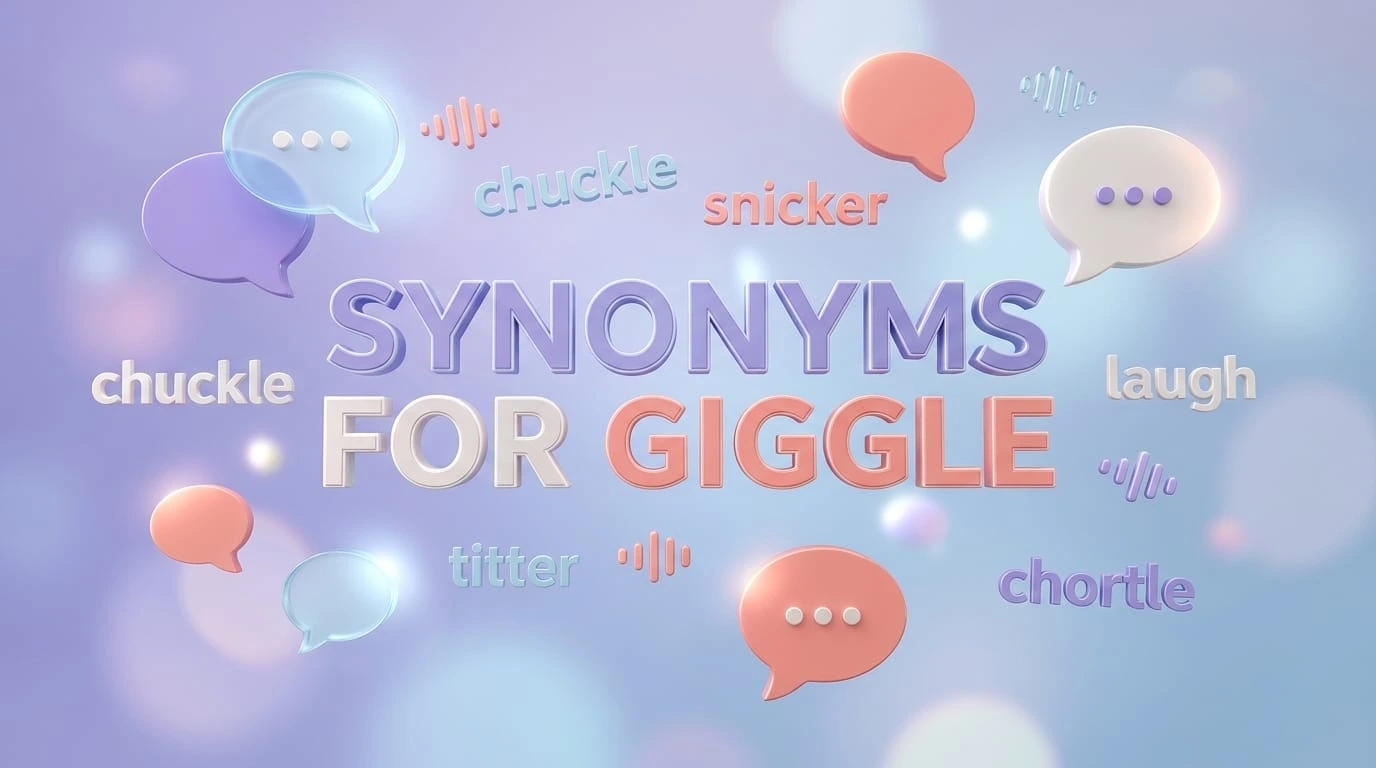
Useful synonyms and contextual alternatives for giggle include chuckle, titter, snicker, snigger, chortle, laugh, cackle, guffaw, mirth, merriment, and hilarity.
Imagine a student trying to stay quiet during a serious class when something funny happens. She covers her mouth and lets out a small giggle. It is light, playful, and difficult to hide.
The word giggle is common, but it does not always describe every kind of laugh. A chuckle can sound warm and quiet, a titter may suggest nervousness, and a guffaw is much louder. Choosing the right alternative can make your writing more precise.
This guide explains the meaning of giggle, gives 25 useful synonyms and contextual alternatives, and answers common searches such as “What is a word for a soft laugh?”, “What is another word for giggly?”, “What is another word for laughter?”, “What is British slang for laugh?”, and “What is a fancy word for laughing?”
What Does Giggle Mean?
Giggle means to laugh lightly and repeatedly, usually because of amusement, nervousness, embarrassment, or playfulness.
It works as both a verb and a noun:
- Verb: She giggled at the joke.
- Noun: A quiet giggle came from the back of the room.
The word is usually neutral or positive, but it can sometimes suggest immaturity or inappropriate laughter depending on the context.
25 Synonyms for Giggle
These words are not all exact replacements. Some describe a particular type, sound, emotion, or intensity of laughter.
1. Chuckle
Part of speech: Verb/Noun
A quiet, warm laugh that shows amusement.
- He chuckled at the funny comment.
- Her chuckle made everyone smile.
2. Titter
Part of speech: Verb/Noun
A restrained or nervous laugh.
- She gave a nervous titter.
- The students tittered at the unexpected joke.
3. Snicker
Part of speech: Verb/Noun
A quiet laugh, often at something silly or embarrassing.
- The boys snickered at the mistake.
- I heard a snicker behind me.
4. Snigger
Part of speech: Verb/Noun
A British English form of snicker, often suggesting a quiet or mocking laugh.
- They sniggered at the unusual answer.
- He tried to hide his snigger.
5. Chortle
Part of speech: Verb/Noun
A cheerful, amused laugh.
- Grandpa chortled at the old joke.
- She gave a happy chortle.
6. Laugh
Part of speech: Verb/Noun
The general term for expressing amusement through laughter.
- Everyone laughed at the story.
- His laugh was easy to recognize.
7. Laugh softly
Part of speech: Verb phrase
To laugh gently without making much noise.
- She laughed softly at the memory.
- He laughed softly to himself.
8. Laugh quietly
Part of speech: Verb phrase
To laugh in a restrained way.
- The children laughed quietly during the activity.
- She laughed quietly when she saw the picture.
9. Cackle
Part of speech: Verb/Noun
A sharp, loud, or sometimes unpleasant laugh.
- The character cackled loudly.
- Her cackle echoed through the room.
10. Guffaw
Part of speech: Verb/Noun
A loud and hearty laugh.
- He guffawed at the comedian’s joke.
- A loud guffaw came from the audience.
11. Roar
Part of speech: Verb/Noun
To laugh extremely loudly.
- The audience roared with laughter.
- We roared when he told the story.
12. Tittering
Part of speech: Noun/Participle
A restrained or nervous form of laughter.
- The quiet tittering revealed their embarrassment.
- Tittering spread through the group.
13. Amusement
Part of speech: Noun
A feeling of enjoyment caused by something funny or entertaining.
- The story caused great amusement.
- She watched with amusement.
14. Mirth
Part of speech: Noun
Happiness and amusement expressed through laughter or smiles.
- The room was filled with mirth.
- His joke brought mirth to the group.
15. Merriment
Part of speech: Noun
Cheerful fun and lively enjoyment.
- The party was full of merriment.
- Their voices reflected the merriment of the evening.
16. Hilarity
Part of speech: Noun
Strong amusement accompanied by loud or uncontrollable laughter.
- The mistake caused hilarity.
- The children were overcome with hilarity.
17. Gleeful
Part of speech: Adjective
Very happy and excited in a playful way.
- She gave a gleeful smile.
- The children looked gleeful after winning.
18. Playful
Part of speech: Adjective
Fun, lighthearted, and not serious.
- His playful mood lifted the atmosphere.
- She gave him a playful smile.
19. Silly
Part of speech: Adjective
Playfully foolish or lacking seriousness.
- The children became silly during the game.
- She had a silly grin.
20. Lighthearted
Part of speech: Adjective
Cheerful and free from serious worry.
- They had a lighthearted conversation.
- Her lighthearted mood was contagious.
21. Bubbly
Part of speech: Adjective
Cheerful, energetic, and friendly.
- She has a bubbly personality.
- His bubbly nature made the group comfortable.
22. Mirthful
Part of speech: Adjective
Full of amusement and happiness; often more formal or literary.
- He had a mirthful expression.
- The gathering had a mirthful atmosphere.
23. Jovial
Part of speech: Adjective
Cheerful, friendly, and good-humored.
- His jovial nature made conversation easy.
- She remained jovial throughout the celebration.
24. Crack up
Part of speech: Phrasal verb
To laugh suddenly or intensely because something is very funny.
- That scene made me crack up.
- We cracked up when we saw the photo.
25. Have a giggle
Part of speech: Informal phrase
To enjoy a light, playful laugh.
- We had a giggle over the old pictures.
- The friends had a giggle during the break.
What Is a Word for a Soft Laugh?
If you need a word for a soft laugh, the best choices are:
- Chuckle quiet and warm
- Titter quiet and often nervous
- Giggle light and playful
- Snicker quiet and sometimes mocking
- Chortle cheerful and amused
For most everyday writing, chuckle is a natural choice for a soft, warm laugh.
What Is Another Word for Giggly?
Giggly is an adjective, so the best alternative depends on the intended meaning.
Playful, silly, gleeful, lighthearted, bubbly, mirthful, and jovial can work in different contexts.
For example, playful emphasizes fun behavior, while gleeful emphasizes strong happiness. None is an exact replacement in every sentence.
What Is Another Word for Laughter?
There is no single synonym that fits every use of laughter. Choose according to the type or feeling:
- Mirth cheerful amusement
- Merriment joyful fun
- Hilarity intense amusement
- Amusement enjoyment caused by something funny
- Chuckle a quiet laugh
- Giggle a light or playful laugh
- Guffaw a loud laugh
So, laughter is the broad term, while words such as giggle, chuckle, and guffaw describe particular forms of it.
What Is British Slang for “Laugh”?
There is no single British slang word that replaces laugh in every situation. Common informal British expressions include:
- Have a laugh joke around or enjoy yourself
- Have a giggle enjoy a light laugh
- Crack up laugh a lot
For example, “We had a laugh at the party” can mean that everyone joked around and had fun, rather than simply describing the physical act of laughing.
What Is a Fancy Word for Laughing?
For a more formal or literary style, mirthfully is a useful choice.
Other related words include:
- Mirthful full of amusement
- Mirthfully in an amused, cheerful way
- Merriment cheerful enjoyment
- Jovial cheerful and good-humored
For example:
Simple: She laughed happily.
More literary: She laughed mirthfully.
These are stylistic alternatives rather than exact synonyms for giggle.
Prototype Meaning of Giggle
The typical or prototype meaning of giggle is a light, playful, often repeated laugh.
A typical giggle may be:
- Quiet or moderately soft
- Playful
- High-pitched
- Repeated
- Caused by amusement or nervousness
The exact meaning changes with context. A child’s happy giggle and an embarrassed person’s nervous giggle may sound similar but communicate different feelings.
Prototype Categorization of Giggle Synonyms
| Category | Useful Words | Main Idea |
| Soft laughter | Chuckle, titter, giggle, laugh softly | Quiet or restrained laughter |
| Playful laughter | Giggle, have a giggle, playful, silly | Fun and light behavior |
| Nervous laughter | Titter, giggle, snicker | Embarrassment or nervousness |
| Mocking laughter | Snicker, snigger | Quiet laughter at someone or something |
| Loud laughter | Guffaw, roar, cackle | Strong or noisy laughter |
| Cheerful amusement | Chortle, mirth, merriment, jovial | Warm happiness and enjoyment |
| Formal or literary | Mirth, mirthful, merriment | More polished or literary tone |
| General amusement | Laugh, amusement, hilarity | Broad ideas of enjoyment and laughter |
This grouping helps writers choose a synonym based on sound, emotion, intensity, and tone.
Antonyms of Giggle
Because giggle describes laughter, its contextual opposites can include words connected with sadness, seriousness, or silence.
- Cry shed tears because of sadness or pain.
- Weep cry, often deeply.
- Sob cry with short, uncontrolled breaths.
- Frown show displeasure or seriousness.
- Mourn express deep sadness after a loss.
- Remain silent make no sound or verbal response.
Short Questions and Answers
What does giggle mean?
Giggle means to laugh lightly and repeatedly, often because of amusement, nervousness, embarrassment, or playfulness.
What is a word for a soft laugh?
Chuckle is a natural word for a quiet, warm laugh, while titter often suggests nervousness.
What is another word for giggly?
Depending on context, playful, silly, gleeful, lighthearted, and bubbly can describe someone who is giggly.
What is another word for laughter?
Useful alternatives include mirth, merriment, hilarity, amusement, chuckle, and giggle, depending on the context.
Is giggle the same as chuckle?
No. A giggle is usually lighter and more playful, while a chuckle is generally quieter, deeper, and warmer.
What is a fancy word for laughing?
Mirthfully is a formal or literary alternative for laughing in a cheerful or amused way.
Conclusion
Giggle describes a light and playful form of laughter, but English provides many alternatives for different sounds and emotions. Chuckle suits a quiet laugh, titter can suggest nervousness, snicker may suggest mockery, and guffaw describes loud laughter. For a formal tone, words such as mirthful and merriment can add a more literary feel.
The best synonym depends on the situation, emotion, sound, and tone. Choosing the right word helps your writing sound more natural and precise.
Synonyms for Interpersonal Skills: 22 Descriptive Alternatives
I’m an English language researcher and content writer focused on synonyms, vocabulary development, and word choice. Through clear and informative articles, I help readers expand their vocabulary and choose the right words with confidence.