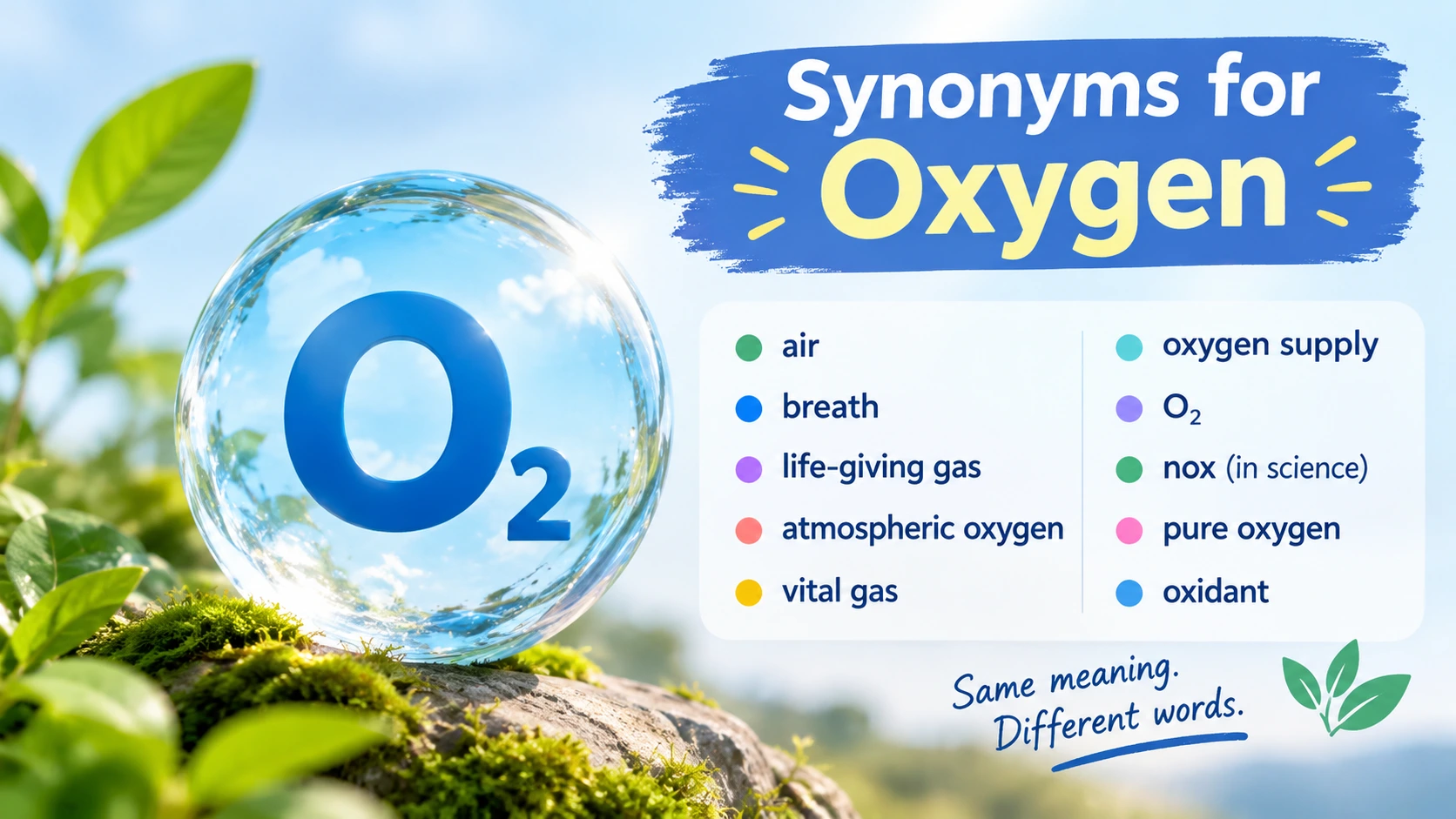
Synonyms for oxygen include O₂, breathable gas, life-supporting gas, and oxidizing agent, depending on the context. Oxygen is a chemical element essential for human respiration and supports combustion. Unlike ordinary words, oxygen has no exact synonym that fully replaces its scientific meaning, so the best alternative depends on how it is used.
Oxygen is one of the most important elements on Earth. It supports human and animal respiration, helps many living organisms survive, and plays a major role in combustion and numerous chemical reactions. When writing about oxygen, you may need different terms for science assignments, biology articles, environmental discussions, or everyday explanations.
However, oxygen does not have many exact synonyms because it is the name of a specific chemical element. Terms such as O₂, breathable gas, and oxidizing agent describe oxygen in particular contexts rather than serving as perfect replacements in every sentence. Understanding these differences will help you choose accurate vocabulary without changing the meaning of your writing.
18 Synonyms and Contextual Alternatives for Oxygen
Because oxygen is a specific chemical element, many alternatives are scientific names, descriptions, or related expressions rather than exact synonyms. The following 18 terms are useful in different contexts.
1. Dioxygen
Meaning: The scientific name for a molecule made of two oxygen atoms, written as O₂.
Example: Dioxygen is essential for aerobic respiration.
2. Molecular Oxygen
Meaning: Oxygen in its molecular form, O₂.
Example: Molecular oxygen is present in the air we breathe.
3. O₂
Meaning: The chemical formula for a molecule containing two oxygen atoms.
Example: Plants release O₂ during photosynthesis.
4. O
Meaning: The chemical symbol for the element oxygen, rather than a synonym for oxygen gas.
Example: The symbol O represents oxygen on the periodic table.
5. Oxygen Gas
Meaning: Oxygen in its gaseous state.
Example: The laboratory stored oxygen gas in a suitable cylinder.
6. Molecular Oxygen Gas
Meaning: Gaseous oxygen consisting of O₂ molecules.
Example: Molecular oxygen gas supports many biological processes.
7. Pure Oxygen
Meaning: Oxygen supplied with a high degree of purity rather than mixed with ordinary air.
Example: The industrial process required pure oxygen.
8. Compressed Oxygen
Meaning: Oxygen gas stored under pressure in a suitable container.
Example: The emergency supply included a cylinder of compressed oxygen.
9. Liquid Oxygen
Meaning: Oxygen cooled enough to become a liquid.
Example: Liquid oxygen is used in certain aerospace applications.
10. Atmospheric Oxygen
Meaning: Oxygen present in Earth’s atmosphere.
Example: Atmospheric oxygen supports the respiration of many living organisms.
11. Breathable Gas
Meaning: A gas suitable for breathing under the relevant conditions; this is a descriptive phrase, not an exact synonym for oxygen.
Example: Divers need a suitable breathable gas mixture underwater.
12. Life-Supporting Gas
Meaning: A descriptive expression for a gas that helps sustain life in a particular context.
Example: Oxygen is often described as a life-supporting gas because it enables aerobic respiration.
13. Vital Air
Meaning: An old-fashioned expression historically associated with oxygen.
Example: Early scientific writers sometimes used the expression vital air when discussing oxygen.
14. Dephlogisticated Air
Meaning: A historical term once used for oxygen before modern chemistry developed.
Example: Historical accounts describe oxygen as “dephlogisticated air.”
15. Oxygenium
Meaning: A Latinized name associated with the element oxygen.
Example: Oxygenium may appear in historical or specialized terminology.
16. Oxidizing Gas
Meaning: A gas that can act as an oxidizing agent; oxygen is a common example.
Example: Oxygen acts as an oxidizing gas in many combustion reactions.
17. Respiration-Supporting Gas
Meaning: A descriptive phrase for a gas that supports breathing or cellular respiration under suitable conditions.
Example: The medical equipment supplied a respiration-supporting gas to the patient.
18. Essential Respiratory Gas
Meaning: A descriptive expression for a gas required for a particular form of respiration.
Example: Oxygen is an essential respiratory gas for humans.
Important distinction: The closest scientific alternatives are dioxygen, molecular oxygen, and O₂. Terms such as breathable gas and life-supporting gas are descriptions, while vital air and dephlogisticated air are historical expressions. These terms should not be substituted blindly in scientific writing.
Synonyms for Oxygen by Context
Scientific and Chemical Terms
Use these terms when writing about chemistry, biology, or the structure of oxygen molecules.
- Dioxygen
- Molecular oxygen
- O₂
- Oxygen gas
- Oxygenium
Example: The experiment measured the amount of molecular oxygen produced during the reaction.
Medical and Respiratory Context
These expressions describe oxygen’s role in breathing and supporting life.
- Breathable gas
- Life-supporting gas
- Respiration-supporting gas
- Essential respiratory gas
Example: The patient received supplemental oxygen to help maintain adequate oxygen levels.
Remember that breathable gas can refer to a mixture of gases, not oxygen alone.
Industrial and Physical Forms
Use these terms when discussing oxygen in manufacturing, storage, or specialized applications.
- Pure oxygen
- Compressed oxygen
- Liquid oxygen
- Oxidizing gas
Example: Liquid oxygen is used in certain rocket propulsion systems.
Historical Terms for Oxygen
Older scientific writing may use expressions that are uncommon in modern English.
- Vital air
- Dephlogisticated air
Example: The historical term dephlogisticated air was used before the modern understanding of oxygen was established.
Oxygen in a Sentence
Here are five examples showing how oxygen is used naturally in different contexts.
- Humans need oxygen to survive.
- Plants release oxygen during photosynthesis.
- The medical team supplied supplemental oxygen to the patient.
- Liquid oxygen is used in some aerospace applications.
- The experiment measured the concentration of molecular oxygen in the sample.
Oxygen vs. Air vs. Dioxygen vs. Ozone
These terms are related, but they do not mean the same thing.
- Oxygen: A chemical element with the symbol O and atomic number 8.
- Air: A mixture of gases, mainly nitrogen and oxygen.
- Dioxygen: A molecule made of two oxygen atoms, represented by O₂.
- Ozone: A form of oxygen made of three oxygen atoms, represented by O₃.
For example, we breathe air, which contains oxygen. Most oxygen gas in the atmosphere occurs as dioxygen, while ozone is a different form of the same element.
Antonyms of Oxygen
Oxygen does not have a direct antonym because it is a chemical element. However, some words express contrasting ideas in particular contexts.
1. Oxygen Deficiency
Meaning: A condition in which oxygen is insufficient for a particular need.
Example: Oxygen deficiency can be dangerous in enclosed spaces.
2. Hypoxia
Meaning: A condition in which body tissues do not receive enough oxygen.
Example: Severe hypoxia can damage vital organs.
3. Anoxia
Meaning: An absence of oxygen in a particular biological or environmental context.
Example: Anoxia can affect organisms living in oxygen-depleted water.
4. Vacuum
Meaning: A space with extremely low pressure and very little matter; it is not an exact antonym of oxygen.
Example: A vacuum does not provide the oxygen needed for ordinary human breathing.
5. Oxygen-Free Environment
Meaning: An environment in which oxygen is absent or maintained at a specified very low level.
Example: The experiment was conducted in an oxygen-free environment.
These are contextual contrasts, not true antonyms of the chemical element oxygen.
Common Mistakes When Using Oxygen Synonyms
1. Confusing Oxygen With Air
Air contains oxygen, but the two are not interchangeable.
- Correct: We need oxygen for aerobic respiration.
- Different meaning: We breathe air, a mixture of gases.
2. Treating O and O₂ as Identical
O is the chemical symbol for the element, while O₂ represents a molecule containing two oxygen atoms.
3. Calling Ozone Oxygen Gas
Ozone (O₃) is a distinct form of oxygen. It should not be used as a direct replacement for O₂.
4. Using Historical Terms in Modern Scientific Writing
Expressions such as vital air and dephlogisticated air belong mainly to historical discussions. In modern science writing, use oxygen, molecular oxygen, or O₂ where appropriate.
Frequently Asked Questions
1. What is the closest synonym for oxygen?
Dioxygen and molecular oxygen are the closest scientific alternatives when referring to oxygen gas in its common molecular form, O₂.
2. What are five words related to oxygen?
Five useful terms are dioxygen, molecular oxygen, oxygen gas, atmospheric oxygen, and liquid oxygen. Some name forms or contexts of oxygen rather than exact synonyms.
3. Is air a synonym for oxygen?
No. Air is a mixture of gases, while oxygen is a chemical element. Air contains oxygen along with nitrogen and smaller amounts of other gases.
4. What is an old word for oxygen?
Dephlogisticated air is a historical term once used for oxygen. It is useful when discussing the history of chemistry, but it is not a common modern synonym.
5. What is the opposite of oxygen?
Oxygen has no exact antonym. Depending on the context, expressions such as oxygen deficiency, anoxia, or oxygen-free environment describe the absence or lack of oxygen.
Conclusion
Oxygen has few exact synonyms because it is the name of a specific chemical element. Dioxygen, molecular oxygen, and O₂ are the most useful scientific alternatives, while expressions such as breathable gas and life-supporting gas describe its role. Historical terms such as dephlogisticated air can add context to discussions of early chemistry. Choosing accurate terminology helps keep scientific and everyday writing clear.
Synonyms for Checks and Balances: 30 Useful Alternatives

I’m Daniel Carter, specialize in helping readers discover synonyms, expand their vocabulary, and choose the perfect word with confidence. My content helps readers improve their English, avoid common mistakes, and write with confidence. My goal is to provide accurate, reliable, and easy-to-understand language resources