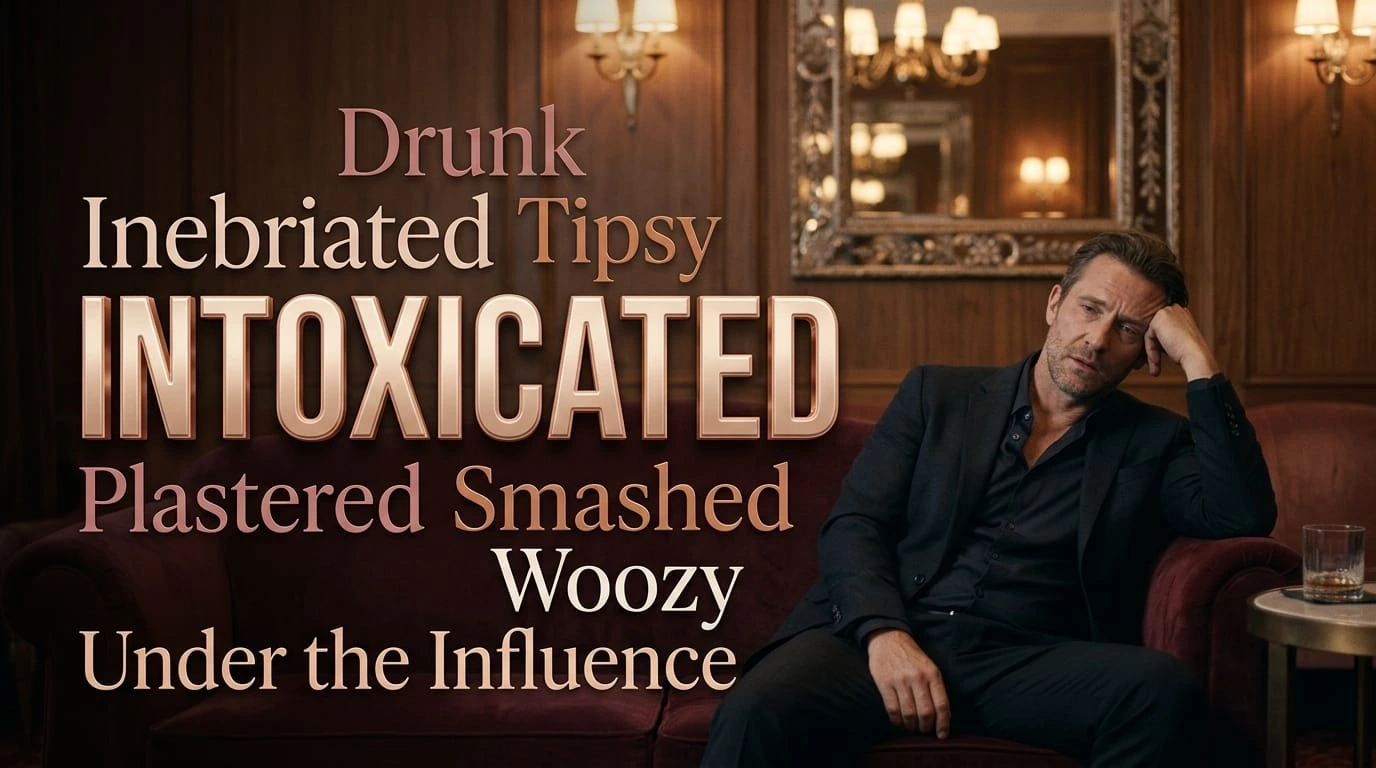
The best synonyms for intoxicated include drunk, inebriated, tipsy, buzzed, wasted, plastered, sloshed, smashed, high, stoned, impaired, and under the influence.
Intoxicated means being affected by alcohol, drugs, or another substance that changes how a person thinks, feels, or acts. Imagine someone at a party who drinks too much and starts speaking loudly, walking poorly, or losing focus. You might describe that person as intoxicated. This word is common in daily conversations, news reports, medical writing, and formal discussions. However, using the same word again and again can make writing feel dull. Learning synonyms helps English learners express ideas more clearly and choose words that fit different situations. In this guide, you will explore the meaning of intoxicated, its pronunciation, word history, grammar, and 20 useful synonyms. You will also learn how to use these alternatives naturally through simple examples and semantic groups.
Meaning of Intoxicated
Definition
Intoxicated (Adjective): A person who is intoxicated is affected by alcohol, drugs, or another substance in a way that changes their normal mental or physical condition.
It can also describe someone whose judgment, balance, speech, or behavior is affected by a substance.
Examples
- The driver was intoxicated and could not control the car safely.
- He seemed intoxicated after drinking several glasses of wine.
Connotative Meaning
(Connotation: the feelings or ideas that a word suggests beyond its basic meaning.)
- Positive tone: In some social settings, intoxicated may be linked with excitement or celebration, although it does not mean that intoxication is safe.
- Negative tone: It often suggests poor judgment, unsafe behavior, loss of control, or health risks.
- Neutral tone: In medical, legal, and scientific writing, it can describe a person’s condition without expressing a personal opinion.
Etymology of Intoxicated
The word intoxicated comes from the Latin word intoxicare, meaning to poison or affect with poison. Its history is connected to the Latin toxicum, meaning poison.
- Old English (450–1100): The word intoxicated was not part of everyday Old English vocabulary. English used other words and expressions to describe drunkenness or poisoning.
- Middle English (1100–1500): The term entered English through medieval Latin and related European language forms. Its early sense was closely connected to poisoning.
- Modern English (1500–Present): Its meaning developed to include the effects of alcohol and other substances on the body and mind. Today, it is widely used in medical, legal, and everyday contexts.
Pronunciation (IPA)
- IPA (British): /ɪnˈtɒk.sɪ.keɪ.tɪd/
- IPA (American): /ɪnˈtɑːk.səˌkeɪ.tɪd/
- Syllables: in-tox-i-cat-ed
- Stress: The main stress falls on the second syllable.
Affixation Pattern of Intoxicated
- Root: Toxic – relating to poison or something harmful.
- Prefix: In- – part of the historical formation of intoxicate; it does not carry its usual negative meaning here.
- Suffix: -ate – helps form the verb intoxicate.
- Suffix: -ed – forms the past participle and adjective intoxicated.
Word Formations
- Intoxicate (Verb): To affect someone with alcohol, drugs, or poison.
- Intoxicated (Adjective): Affected by an intoxicating substance.
- Intoxicating (Adjective): Causing intoxication or producing a strong, exciting effect.
- Intoxication (Noun): The condition of being affected by alcohol, drugs, or poison.
- Intoxicant (Noun): A substance that causes intoxication.
- Intoxicatingly (Adverb): In a way that produces a powerful or exciting effect; a rare form.
20 Synonyms of Intoxicated With Meaning & Examples
The following alternatives range from formal and medical terms to casual expressions. Some describe alcohol use, while others refer to drug effects or general impairment.
1. Drunk (Adjective)
Meaning: A person who has consumed enough alcohol to affect their normal behavior or thinking.
Examples:
- He was too drunk to drive home.
- The drunk man struggled to walk straight.
2. Inebriated (Adjective)
Meaning: A formal word describing someone affected by alcohol.
Examples:
- The inebriated guest needed help getting home.
- Police stopped an inebriated driver.
3. Tipsy (Adjective)
Meaning: Slightly affected by alcohol, often with mild changes in behavior or balance.
Examples:
- She felt tipsy after one glass of wine.
- His tipsy behavior made his friends laugh.
4. Buzzed (Adjective)
Meaning: Slightly affected by alcohol or drugs, often with a feeling of excitement or lightness.
Examples:
- He felt buzzed after a few drinks.
- She was slightly buzzed at the party.
5. High (Adjective)
Meaning: Affected by drugs, especially substances that change mood, perception, or awareness.
Examples:
- The man appeared high after taking drugs.
- He admitted that he had driven while high.
6. Stoned (Adjective)
Meaning: Strongly affected by cannabis or another drug.
Examples:
- He looked stoned after using cannabis.
- The character seemed completely stoned in the movie.
7. Wasted (Adjective)
Meaning: Extremely drunk or heavily affected by drugs.
Examples:
- He was wasted after drinking all night.
- The party ended when several guests became wasted.
8. Plastered (Adjective)
Meaning: Very drunk, usually because of drinking too much alcohol.
Examples:
- They found him plastered at the bar.
- My uncle was completely plastered after the celebration.
9. Sloshed (Adjective)
Meaning: Very drunk and often unable to behave normally.
Examples:
- He became sloshed at the wedding.
- The sloshed guests needed a safe ride home.
10. Smashed (Adjective)
Meaning: Extremely drunk or strongly affected by alcohol.
Examples:
- She was smashed after the party.
- His friends noticed that he was getting smashed.
11. Loaded (Adjective)
Meaning: Informally describing someone who is very drunk or affected by drugs.
Examples:
- He arrived home completely loaded.
- The loaded passenger could barely speak clearly.
12. Soused (Adjective)
Meaning: Very drunk, especially after drinking a lot of alcohol.
Examples:
- The man was soused after the evening party.
- His soused behavior worried his family.
13. Pickled (Adjective)
Meaning: An informal and humorous expression for being very drunk.
Examples:
- He got pickled at the birthday celebration.
- The pickled guest needed help finding a taxi.
14. Under the Influence (Adjectival Phrase)
Meaning: Affected by alcohol or drugs to a degree that changes normal behavior or ability.
Examples:
- The driver was under the influence of alcohol.
- Driving under the influence can put lives at risk.
15. Impaired (Adjective)
Meaning: Having reduced mental or physical ability because of alcohol, drugs, illness, or another cause.
Examples:
- His judgment was impaired by alcohol.
- The medication left her temporarily impaired.
16. Drugged (Adjective)
Meaning: Affected by a drug, sometimes without knowing that it has been taken.
Examples:
- The victim believed that his drink had been drugged.
- She felt confused and drugged after taking the medicine.
17. Befuddled (Adjective)
Meaning: Confused or unable to think clearly, sometimes because of alcohol or drugs.
Examples:
- He looked befuddled after drinking too much.
- The medication left the patient feeling befuddled.
18. Dazed (Adjective)
Meaning: Unable to think clearly or react normally because of a substance or another physical effect.
Examples:
- He seemed dazed after taking the medication.
- The intoxicated passenger looked dazed and confused.
19. Woozy (Adjective)
Meaning: Feeling dizzy, weak, or slightly confused, sometimes because of alcohol or drugs.
Examples:
- She felt woozy after taking the medicine.
- He became woozy after drinking on an empty stomach.
20. Stupefied (Adjective)
Meaning: So strongly affected that a person becomes unable to think or respond normally.
Examples:
- The drug left him completely stupefied.
- He sat stupefied, unable to follow the conversation.
Prototype Meaning
The most typical meaning of intoxicated is being mentally or physically affected by alcohol. When people hear this word, they often imagine someone who has drunk too much and cannot behave, speak, or move normally. However, the word has a wider meaning. It can also describe the effects of drugs, medicines, and poisonous substances. The central idea is a change in normal mental or physical ability because of a substance.
Prototype Categorization
The 20 synonyms above can be divided into meaningful groups based on their use, intensity, and context.
- Formal and Standard Terms: Inebriated, impaired, and under the influence. These expressions work well in professional, legal, and educational writing.
- Mild Intoxication: Tipsy and buzzed. These words describe a lighter effect of alcohol.
- Strong Alcohol Intoxication: Drunk, plastered, sloshed, smashed, loaded, soused, and pickled. Most are informal expressions for heavy drinking.
- Drug-Related Intoxication: High, stoned, and drugged. These terms describe the effects of drugs or other substances.
- Mental and Physical Effects: Wasted, befuddled, dazed, woozy, and stupefied. These words focus on the changes in awareness, thinking, or physical condition.
This categorization helps writers select the right word for each situation. For example, inebriated suits a formal report, while tipsy works better in a casual conversation. Choosing the right alternative makes writing clearer and more accurate.
Antonyms of Intoxicated
Antonyms describe the opposite condition of being intoxicated.
- Sober (Adjective): Not affected by alcohol or drugs.
Example: She remained sober throughout the event. - Clear-headed (Adjective): Able to think clearly and make sensible decisions.
Example: He stayed clear-headed during the emergency. - Unimpaired (Adjective): Having normal mental or physical abilities.
Example: The test confirmed that his judgment was unimpaired. - Alert (Adjective): Fully aware and quick to respond.
Example: The driver remained alert throughout the journey. - Lucid (Adjective): Thinking clearly and understanding things well.
Example: The patient was lucid during the examination. - Composed (Adjective): Calm and in control of emotions and behavior.
Example: She remained composed during the discussion.
Short Questions and Answers
What does intoxicated mean?
Intoxicated means being affected by alcohol, drugs, or another substance that changes normal mental or physical abilities.
When should intoxicated be used?
Use intoxicated when describing someone whose thinking, judgment, balance, or behavior is affected by alcohol or another substance. It is suitable for formal, medical, and everyday contexts.
Is intoxicated positive or negative?
Intoxicated usually has a negative or neutral meaning. It can suggest impaired judgment, unsafe behavior, or a medical condition. The exact tone depends on the context.
How is intoxicated different from similar words?
Intoxicated is a broad term that can describe the effects of alcohol, drugs, and poisonous substances. Drunk usually refers to alcohol, while high and stoned commonly refer to drugs. Tipsy describes mild alcohol effects, whereas plastered and smashed suggest heavy drinking.
Conclusion
Learning the meaning of intoxicated and its synonyms can make your English vocabulary stronger. Words such as drunk, inebriated, tipsy, buzzed, and impaired help you describe different levels and types of intoxication. Each alternative has its own meaning, tone, and suitable context. Some work well in formal writing, while others are better for casual conversations. Using the right synonym also helps you avoid repetition and express ideas more clearly. English learners can build confidence by reading examples, comparing similar words, and practising them in daily sentences. Try learning a few new words each day and use them in your own writing and speaking.
Synonyms for Indifference: 30 Powerful Alternatives

I am a professional content writer with a passion for English vocabulary and word meanings. I create clear, informative guides on synonyms, alternative words, and word usage to help readers choose the right word and communicate with confidence.