Quick Answer
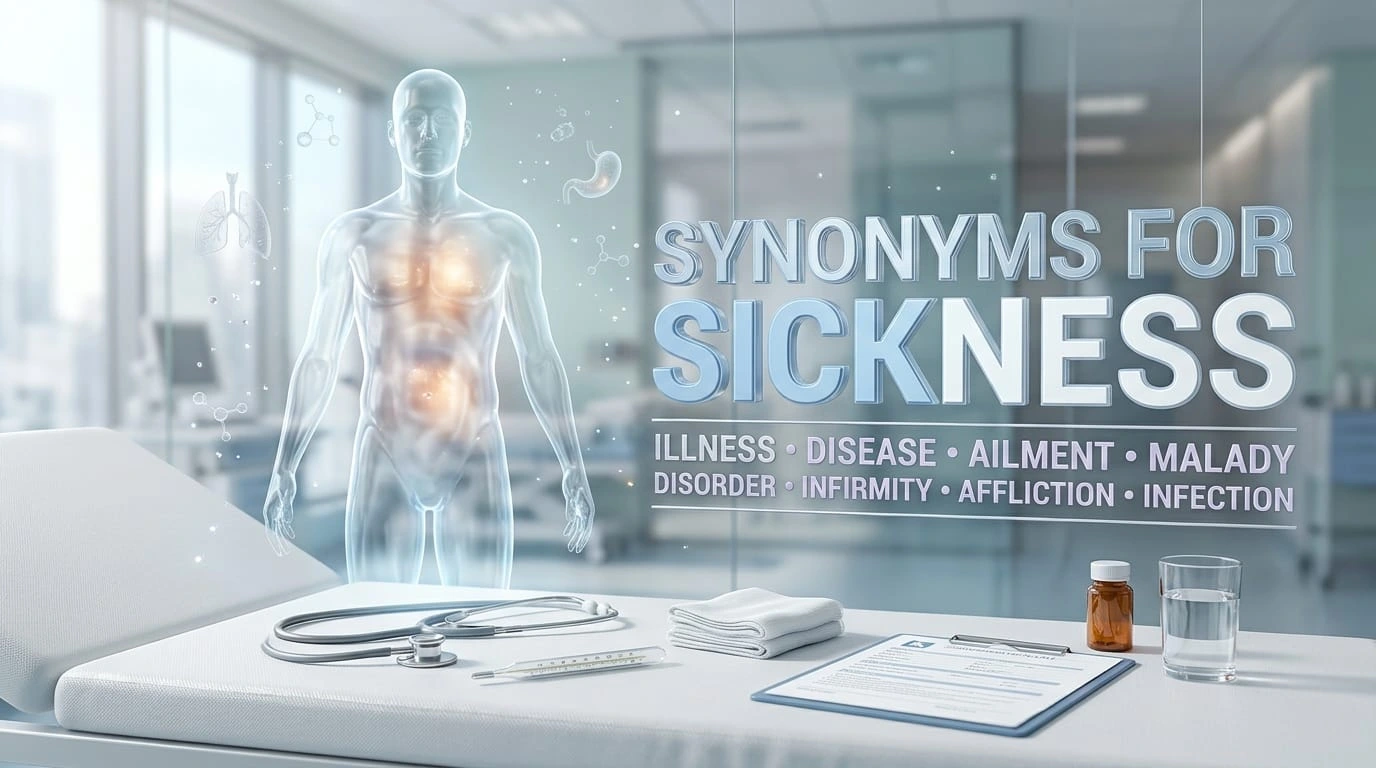
- Illness
- Disease
- Ailment
- Disorder
- Infection
- Malady
- Condition
- Affliction
- Indisposition
- Complaint
- Infirmity
- Suffer
Sickness means a state of being ill or having a health problem. For example, when someone catches an infection, develops a fever, or feels unwell, we may say that the person is suffering from sickness. This word is common in daily conversations, schools, hospitals, and health-related writing. However, using the same word again and again can make writing sound repetitive. Learning synonyms helps English learners describe health problems more clearly and gives content writers better ways to express ideas. In this guide, you will explore the meaning of sickness, 25 useful alternatives, their meanings, examples, pronunciation, word history, and grammatical forms. You will also learn how to group these words by meaning and choose the right expression for each situation.
Meaning of Sickness
Definition
Sickness (Noun): The state of being ill or having a disease or health problem.
It can also refer to the feeling of nausea or the condition of being unwell.
Examples
- She could not attend school because of sickness.
- The doctor helped him recover from his sickness.
- His sickness made it difficult for him to work.
- The medicine helped reduce her sickness.
Connotative Meaning
Connotation: The feeling or idea that a word suggests beyond its basic meaning.
- Positive tone: Sickness has no common positive meaning, but discussing recovery from sickness can suggest hope and healing.
- Negative tone: It often suggests pain, discomfort, weakness, or poor health.
- Neutral tone: It can simply describe a person’s medical condition without expressing strong feelings.
Etymology of Sickness
The word sickness comes from Old English and is formed from the word sick and the suffix -ness.
- Old English (450–1100): Sickness developed from sēoc, meaning ill or unhealthy, combined with the noun-forming suffix -ness.
- Middle English (1100–1500): The word appeared in forms such as siknesse and continued to describe illness and poor health.
- Modern English (1500–Present): Sickness is used for physical illness, poor health, and sometimes nausea or emotional distress.
Pronunciation (IPA)
- IPA: /ˈsɪk.nəs/
- Syllables: sick-ness
- Part of speech: Noun
- Word stress: The first syllable is stressed.
Affixation Pattern of Sickness
- Root: Sick
- Prefix: None.
- Suffix: -ness (changes the adjective sick into a noun).
- Word formation: Sick + ness = Sickness.
Related Word Formations
- Sick (Adjective): Not feeling well or suffering from illness.
- Sicken (Verb): To become ill or make someone ill.
- Sickened (Verb): Became ill or was made ill.
- Sickening (Adjective): Causing disgust or nausea.
- Sickness (Noun): The state of being ill.
- Sickly (Adjective): Looking unhealthy or often feeling ill.
- Sickliness (Noun): A state of being frequently unwell.
25 Synonyms of Sickness With Meaning and Examples
1. Illness (Noun)
Meaning: A condition in which someone is not healthy.
Examples:
- She missed school because of her illness.
- The illness made him feel weak and tired.
2. Disease (Noun)
Meaning: A medical condition that affects the normal working of the body or mind.
Examples:
- The disease can affect the lungs.
- Doctors are working to treat the disease.
3. Ailment (Noun)
Meaning: An illness or health problem, usually one that is not very serious.
Examples:
- He visited the doctor for a minor ailment.
- Her stomach ailment caused discomfort.
4. Disorder (Noun)
Meaning: A condition that affects the normal working of the body or mind.
Examples:
- The doctor diagnosed a digestive disorder.
- This disorder can affect daily activities.
5. Infection (Noun)
Meaning: An illness caused by harmful germs entering the body.
Examples:
- The infection caused redness and swelling.
- She received treatment for a skin infection.
6. Malady (Noun)
Meaning: A disease or health problem.
Examples:
- The doctor searched for the cause of his malady.
- The old man suffered from a serious malady.
7. Condition (Noun)
Meaning: A health problem that affects a person’s body or mind.
Examples:
- Her medical condition needs regular care.
- The condition became worse over time.
8. Affliction (Noun)
Meaning: A health problem or illness that causes pain or suffering.
Examples:
- The affliction made everyday tasks difficult.
- He learned to live with his long-term affliction.
9. Indisposition (Noun)
Meaning: A slight illness or feeling of being unwell.
Examples:
- She stayed home because of a minor indisposition.
- His indisposition prevented him from attending the event.
10. Complaint (Noun)
Meaning: A health problem or symptom that a person tells a doctor about.
Examples:
- Her main complaint was a severe headache.
- The patient reported a stomach complaint.
11. Infirmity (Noun)
Meaning: Physical weakness or poor health, often due to age or illness.
Examples:
- Old age brought several physical infirmities.
- He continued working despite his infirmity.
12. Debility (Noun)
Meaning: A state of physical weakness or lack of strength.
Examples:
- The long illness caused serious debility.
- She needed time to recover from her debility.
13. Distemper (Noun)
Meaning: An illness or disease, especially one affecting animals.
Examples:
- The veterinarian treated the dog for distemper.
- Vaccination can help protect dogs against distemper.
14. Unwellness (Noun)
Meaning: The state of feeling ill or not being healthy.
Examples:
- Her unwellness kept her away from work.
- He complained of general unwellness.
15. Malaise (Noun)
Meaning: A general feeling of discomfort, weakness, or being unwell.
Examples:
- She experienced a feeling of malaise throughout the day.
- The patient reported fatigue and general malaise.
16. Nausea (Noun)
Meaning: An unpleasant feeling in the stomach that makes someone feel like vomiting.
Examples:
- The medicine caused mild nausea.
- He experienced nausea during the journey.
17. Fever (Noun)
Meaning: A higher-than-normal body temperature, often caused by illness.
Examples:
- The child developed a fever during the night.
- Her fever lasted for two days.
18. Contagion (Noun)
Meaning: The spread of an infectious disease from one person or organism to another.
Examples:
- The hospital took steps to prevent contagion.
- Good hygiene can help reduce the spread of contagion.
19. Virus (Noun)
Meaning: A tiny infectious agent that can cause illness in living organisms.
Examples:
- A virus caused his respiratory illness.
- The virus spread quickly through the community.
20. Health Issue (Noun Phrase)
Meaning: A problem that affects someone’s physical or mental health.
Examples:
- She visited the doctor about a health issue.
- The health issue affected his daily routine.
21. Medical Problem (Noun Phrase)
Meaning: A condition or difficulty that requires medical attention.
Examples:
- The doctor identified a medical problem.
- He needs treatment for his medical problem.
22. Physical Discomfort (Noun Phrase)
Meaning: An unpleasant feeling in the body, such as pain or uneasiness.
Examples:
- The patient experienced physical discomfort.
- The medicine helped reduce her physical discomfort.
23. Poor Health (Noun Phrase)
Meaning: A state in which someone does not have good physical or mental health.
Examples:
- Poor health affected his ability to work.
- Regular exercise can help prevent poor health.
24. Suffering (Noun)
Meaning: Physical or mental pain caused by illness or another difficult experience.
Examples:
- The treatment helped reduce her suffering.
- The disease caused years of suffering.
25. Physical Weakness (Noun Phrase)
Meaning: A lack of normal strength in the body.
Examples:
- Physical weakness made walking difficult.
- He experienced physical weakness after the illness.
Usage note: Illness, disease, ailment, and malady are close alternatives to sickness. Words such as fever, nausea, and physical weakness describe particular symptoms rather than sickness as a whole.
Prototype Meaning of Sickness
The most common meaning of sickness is a state of being physically unwell because of an illness or disease. When people hear this word, they often imagine someone who has a fever, cough, headache, stomach pain, or weakness. They may also think of a person visiting a doctor, taking medicine, or resting at home. However, sickness can describe more than one health problem. It may refer to a general illness, a specific feeling of nausea, or a period of poor health. Its exact meaning depends on the situation in which it is used.
Prototype Categorization of Sickness Synonyms
The synonyms of sickness can be grouped by their meanings and uses. This table helps writers understand the differences and select the most suitable alternative.
| Semantic Category | Synonyms | Core Meaning | Best Used When |
|---|---|---|---|
| General illness | Illness, sickness, malady, indisposition, unwellness | A general state of being unwell | Describing common health problems |
| Medical diseases | Disease, disorder, infection, distemper, virus | A specific medical condition or infectious cause | Medical and health-related writing |
| Physical weakness | Debility, infirmity, physical weakness, poor health | Lack of strength or poor physical condition | Describing weakness or declining health |
| Health conditions | Ailment, condition, affliction, medical problem, health issue | A health problem affecting someone | Everyday and professional communication |
| Symptoms and discomfort | Nausea, fever, malaise, physical discomfort, complaint | Signs or feelings associated with illness | Describing specific symptoms |
| Serious effects of illness | Suffering | Pain or distress caused by illness | Describing the impact of a health problem |
| Disease transmission | Contagion | The spread of infectious illness | Discussing contagious diseases |
How Does This Categorization Help Writers?
This categorization helps writers choose words that match the exact health problem.
- Use illness or ailment for general health problems.
- Use disease or disorder for specific medical conditions.
- Use infection when harmful germs cause illness.
- Use malaise when describing a general feeling of discomfort.
- Use nausea when someone feels like vomiting.
- Use debility or infirmity when describing physical weakness.
- Use suffering when focusing on pain or distress caused by illness.
Choosing the correct word makes writing more accurate, clear, and professional.
Antonyms of Sickness
Antonyms are words with opposite meanings. The best opposite of sickness depends on whether you mean physical illness, weakness, or poor health.
1. Health (Noun)
Meaning: The state of being physically and mentally well.
- Regular exercise improves health.
- Good health is important for a happy life.
2. Wellness (Noun)
Meaning: The state of being healthy and feeling well.
- She follows a healthy routine to support her wellness.
- Good sleep is important for overall wellness.
3. Fitness (Noun)
Meaning: The state of being physically strong and healthy.
- Walking daily improves physical fitness.
- The athlete works hard to maintain fitness.
4. Vitality (Noun)
Meaning: The state of having energy, strength, and enthusiasm.
- The fresh air gave him a sense of vitality.
- Regular exercise can improve vitality.
5. Well-being (Noun)
Meaning: A state of being comfortable, healthy, and happy.
- Exercise supports physical well-being.
- Her family cares about her overall well-being.
6. Strength (Noun)
Meaning: The quality of being physically or mentally strong.
- Rest helped him regain his strength.
- She showed great strength during recovery.
7. Robustness (Noun)
Meaning: The quality of being strong and healthy.
- Good nutrition can support physical robustness.
- The doctor was pleased with his recovery and robustness.
8. Soundness (Noun)
Meaning: The condition of being healthy, strong, or free from problems.
- The examination confirmed the soundness of his health.
- Regular checkups help maintain physical soundness.
Short Questions and Answers
What does sickness mean?
Sickness means the state of being ill or having a health problem. It can also refer to nausea or general discomfort.
When should sickness be used?
Use sickness when talking about illness, poor health, or feeling unwell. For example, “She missed work because of sickness.”
Is sickness positive or negative?
Sickness generally has a negative meaning because it refers to illness, discomfort, or poor health. However, it is often used neutrally in medical and everyday communication.
How is sickness different from similar words?
Sickness is a general term for being unwell. Disease refers to a specific medical condition, illness describes the state of being ill, and ailment often refers to a minor health problem.
What is the most common synonym for sickness?
Illness is one of the closest and most commonly used synonyms. Both words describe a state of being unwell.
What is a formal word for sickness?
Malady, ailment, affliction, and indisposition are more formal alternatives, although they have slightly different meanings.
Can sickness refer to nausea?
Yes. Sickness can refer to nausea, which is the unpleasant feeling that you may vomit. For example, motion sickness describes nausea caused by movement.
Conclusion
Learning synonyms for sickness helps you describe health problems in a clearer and more natural way. Words such as illness, disease, ailment, infection, and malady offer useful alternatives, but each has a slightly different meaning. Some describe general illness, while others refer to specific medical conditions, symptoms, or physical weakness. Understanding these differences improves your vocabulary and helps you avoid repetition in writing and speaking. These words are useful in school assignments, everyday conversations, and health-related articles. Try learning a few alternatives each day and use them in your own sentences. With regular practice, you can improve your English skills, express ideas more accurately, and communicate with greater confidence.
Synonyms for Weary: 30 Powerful Alternatives

I’m Daniel Carter, specialize in helping readers discover synonyms, expand their vocabulary, and choose the perfect word with confidence. My content helps readers improve their English, avoid common mistakes, and write with confidence. My goal is to provide accurate, reliable, and easy-to-understand language resources