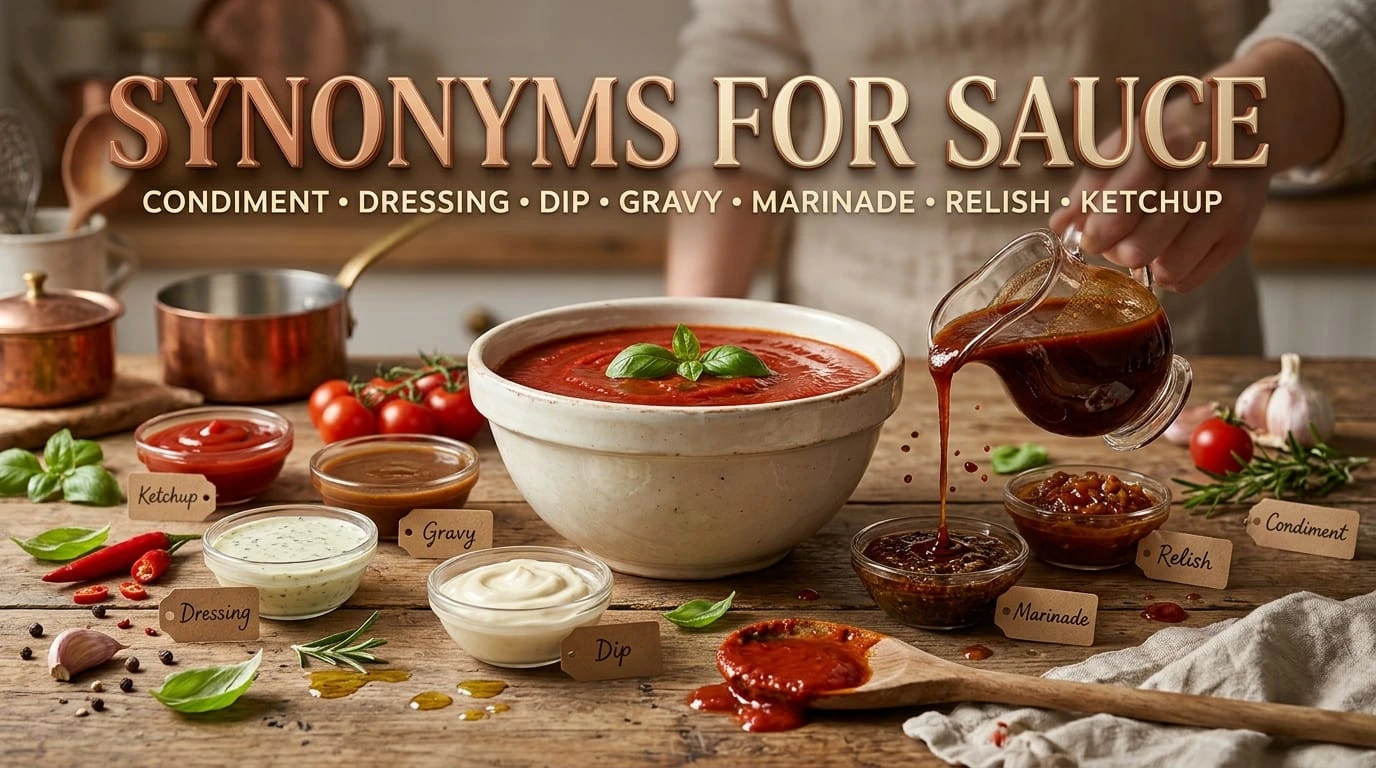
Quick Answer
- Condiment
- Dressing
- Gravy
- Dip
- Salsa
- Marinade
- Puree
Sauce is a liquid or semi-liquid food mixture added to a dish to improve its taste, texture, or appearance. Think of tomato sauce on pasta, gravy over mashed potatoes, or a creamy dressing on a fresh salad. Each one adds something special to a meal. The word sauce is common in cooking, recipes, restaurants, and everyday talk. Learning its synonyms helps English learners and food writers describe flavours and dishes with more detail. It also makes writing less repetitive and more natural. In this guide, you will learn the meaning of sauce, its useful synonyms, examples, pronunciation, word forms, and related categories. You will also see how to choose the right word for each food and cooking situation.
Meaning of Sauce
Definition
Sauce (Noun): A thick or thin liquid or semi-liquid mixture served with food to add flavour, moisture, or texture.
Sauce (Verb): To add sauce to food or cover something with sauce.
Examples
- She poured tomato sauce over the pasta.
- This spicy sauce tastes great with grilled chicken.
Connotative Meaning
(Connotation: the feelings or ideas that a word suggests beyond its basic meaning.)
- Positive tone: Sauce can suggest rich flavour, creativity, and delicious food.
- Negative tone: It may suggest too much seasoning or an unhealthy amount of fat, sugar, or salt.
- Neutral tone: It simply refers to a liquid or semi-liquid food mixture served with a dish.
Etymology
The word sauce comes from the Old French word sauce, which came from Latin salsa, meaning “salted” or “seasoned.” It is related to salsus, the Latin word for “salted.”
The word entered English through French and became a common term for a seasoned liquid served with food. Its history does not require a separate Old English origin because it is a French and Latin borrowing.
Pronunciation (IPA)
- IPA: /sɔːs/ (British English), /sɑːs/ (American English)
- Syllables: Sauce (1 syllable)
Affixation Pattern of Sauce
- Root: Sauce
- Prefix: None
- Suffix: None in the base word.
Word formations:
- Sauce (noun): A liquid or semi-liquid food mixture.
- Sauce (verb): To add sauce to food.
- Sauced (verb/adjective): Covered or flavoured with sauce.
- Sauces (plural noun): More than one type of sauce.
- Saucing (verb): The act of adding sauce to food.
- Saucy (adjective): Having a bold, cheeky, or lively manner; also used to describe food with sauce.
- Sauceless (adjective): Without sauce.
25 Synonyms and Contextual Alternatives for Sauce With Meaning and Examples
Note: Not every word below is an exact synonym. Some refer to specific types of sauces, toppings, or mixtures used in cooking.
1. Condiment (Noun)
Meaning: A substance added to food to improve its flavour.
Examples:
- Mustard is a popular condiment for burgers.
- This condiment adds a spicy taste to the meal.
2. Dressing (Noun)
Meaning: A sauce, often made with oil, vinegar, or cream, served with salads.
Examples:
- She added lemon dressing to her salad.
- This creamy dressing tastes fresh and light.
3. Gravy (Noun)
Meaning: A thick sauce often made from meat juices and stock.
Examples:
- He poured hot gravy over the potatoes.
- The chicken tastes better with homemade gravy.
4. Dip (Noun)
Meaning: A thick sauce served with food that people dip into it.
Examples:
- We served a cheese dip with nachos.
- This garlic dip goes well with bread.
5. Salsa (Noun)
Meaning: A sauce made from chopped or blended ingredients, often tomatoes, onions, and peppers.
Examples:
- She served fresh salsa with tortilla chips.
- The spicy salsa added flavour to the meal.
6. Marinade (Noun)
Meaning: A seasoned liquid used to flavour food before cooking.
Examples:
- The chicken stayed in the marinade overnight.
- This lemon marinade gives fish a fresh taste.
7. Glaze (Noun)
Meaning: A thin, shiny coating placed on food for flavour or appearance.
Examples:
- The chef brushed a honey glaze over the carrots.
- The salmon had a sweet soy glaze.
8. Relish (Noun)
Meaning: A chopped and seasoned mixture served with food.
Examples:
- He added cucumber relish to his sandwich.
- The onion relish gave the burger a sharp taste.
9. Puree (Noun)
Meaning: A smooth mixture made by blending or mashing food.
Examples:
- The chef served the fish with pea puree.
- Add the tomato puree to the pan.
10. Topping (Noun)
Meaning: Food placed on top of another dish to add flavour or texture.
Examples:
- Cheese sauce is a popular topping for nachos.
- She chose a spicy topping for her baked potato.
11. Dip Sauce (Noun)
Meaning: A sauce made for dipping foods such as chips, vegetables, or meat.
Examples:
- The restaurant served a sweet dip sauce.
- This dip sauce tastes great with fried chicken.
12. Paste (Noun)
Meaning: A thick, soft mixture of crushed or blended ingredients, often used to add flavour.
Examples:
- Add the curry paste to the hot oil.
- Garlic paste gives the dish a strong flavour.
13. Coulis (Noun)
Meaning: A smooth, thin sauce made from pureed fruit or vegetables.
Examples:
- The dessert came with a raspberry coulis.
- The chef added tomato coulis to the plate.
14. Chutney (Noun)
Meaning: A sweet, sour, or spicy mixture served with food.
Examples:
- Mango chutney tastes great with curry.
- She served mint chutney with the snacks.
15. Pesto (Noun)
Meaning: A thick Italian sauce often made with basil, garlic, cheese, nuts, and oil.
Examples:
- He mixed pesto into the pasta.
- Fresh pesto adds a rich herbal flavour.
16. Salsa Verde (Noun)
Meaning: A green sauce made with herbs and other ingredients.
Examples:
- The fish was served with salsa verde.
- Fresh herbs gave the salsa verde a bright taste.
17. Vinaigrette (Noun)
Meaning: A thin dressing made mainly from oil and vinegar.
Examples:
- She poured a light vinaigrette over the salad.
- This lemon vinaigrette tastes fresh.
18. Aioli (Noun)
Meaning: A creamy garlic sauce, often made with oil and egg.
Examples:
- The fries came with garlic aioli.
- Add a little aioli to your sandwich.
19. Mayonnaise (Noun)
Meaning: A thick, creamy sauce made mainly from oil and egg yolk.
Examples:
- He spread mayonnaise on the bread.
- This salad uses a light mayonnaise dressing.
20. Ketchup (Noun)
Meaning: A smooth, sweet, and tangy tomato-based condiment.
Examples:
- Children often enjoy ketchup with fries.
- She added ketchup to her burger.
21. Mustard (Noun)
Meaning: A sharp-tasting condiment made from mustard seeds.
Examples:
- Add mustard to the hot dog.
- The mustard gave the sandwich a strong taste.
22. Salsa Dip (Noun)
Meaning: A chunky or smooth salsa served as a dip.
Examples:
- We shared a salsa dip with tortilla chips.
- The fresh salsa dip was slightly spicy.
23. Reduction (Noun)
Meaning: A liquid cooked until some water evaporates, making it thicker and stronger in flavour.
Examples:
- The steak came with a red wine reduction.
- A balsamic reduction added a sweet taste.
24. Drizzle (Noun)
Meaning: A small amount of thin liquid poured over food.
Examples:
- Add a drizzle of olive oil before serving.
- A chocolate drizzle made the cake look lovely.
25. Seasoning (Noun)
Meaning: An ingredient, or mixture of ingredients, added to food to improve its flavour.
Examples:
- This seasoning gives the soup a spicy taste.
- Add the seasoning before serving the dish.
Prototype Meaning
The most common meaning of sauce is a liquid or semi-liquid mixture served with food to improve its taste and texture. When people hear this word, they often imagine tomato sauce, gravy, ketchup, or a creamy sauce poured over a meal. It can be smooth, thick, spicy, sweet, or mild. Its main purpose is to make food more flavourful and enjoyable.
Prototype Categorization
The alternatives can be grouped by their use and meaning. This helps writers choose a word that matches the food, recipe, or cooking method.
- General food additions: Condiment, topping, seasoning. These words describe ingredients added to food for extra flavour.
- Salad sauces and dressings: Dressing, vinaigrette. These are commonly used with salads and cold dishes.
- Dips and table sauces: Dip, dip sauce, salsa dip, ketchup, mustard, mayonnaise. These are served alongside food.
- Gravies and cooked sauces: Gravy, reduction, glaze. These often add moisture, flavour, or a coating to cooked dishes.
- Herb-based and regional sauces: Pesto, aioli, salsa verde, chutney, salsa. These names refer to particular sauce styles and ingredients.
- Blended and concentrated mixtures: Puree, paste, coulis, marinade, relish. These describe mixtures used to flavour, coat, or accompany food.
- Ways of adding sauce: Drizzle. This describes a small amount poured over food rather than a specific sauce.
Choosing a word from the right group makes your writing more precise. For example, use vinaigrette for a thin salad dressing, gravy for a meat-based sauce, and dip for a sauce served with snacks.
Antonyms of Sauce
There is no exact opposite of sauce in everyday English. However, these words can describe food without sauce or added flavour.
- Plain (Adjective): Food served without extra sauce or strong flavour.
- Dry (Adjective): Food that lacks moisture or a liquid coating.
- Unseasoned (Adjective): Food without added salt, spices, or other seasonings.
- Sauceless (Adjective): Food prepared or served without sauce.
- Bland (Adjective): Food with little or no strong flavour.
- Bare (Adjective): Food served without extra toppings or additions.
Short Questions and Answers
What does sauce mean?
Sauce is a liquid or semi-liquid mixture served with food to add flavour, moisture, or texture.
When should sauce be used?
Use sauce when talking about a liquid or semi-liquid food mixture added to or served with a dish.
Is sauce positive or negative?
The word is usually neutral. It can suggest something positive when it adds flavour, but the meaning depends on the context.
How is sauce different from similar words?
Sauce is a broad term. Gravy is often made from meat juices, dressing is used on salads, and dip is served with food for dipping.
Conclusion
Learning the word sauce and its alternatives can make your English stronger. Words such as gravy, dressing, dip, and condiment help you describe food in a clear and exact way. They also make recipes, reviews, and daily conversations more interesting. However, remember that some alternatives name a specific kind of sauce, while others describe a topping or seasoning. Choose each word based on its true meaning and use. This will help you avoid mistakes and repeated words. Try learning a few new food words each day. Use them in short sentences, read recipes, and practise speaking. With daily practice, you can build a richer vocabulary and speak with more confidence.
Synonyms for pizza: 25 Tasty Alternatives

I’m a language enthusiast and content writer specializing in English vocabulary, synonyms, word meanings, and alternative word choices. My goal is to help readers expand their vocabulary and express themselves with greater clarity through simple, accurate, and easy-to-understand language guides.